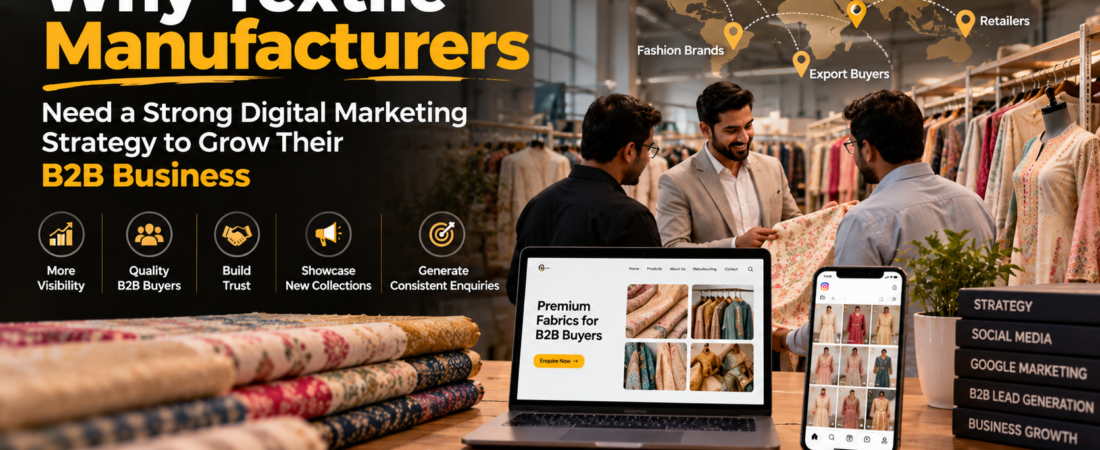
The textile industry is highly competitive. Manufacturers today need more than quality products and good pricing to attract new buyers.
A strong textile digital marketing strategy can help manufacturers increase visibility, connect with wholesalers and distributors, generate enquiries and build long-term B2B relationships.
What Is Textile Digital Marketing?
Textile digital marketing means using online channels to promote textile products and connect with potential B2B buyers.
It can include:
- Social media marketing
- Google Search & SEO
- Meta Ads
- Website marketing
- WhatsApp marketing
- Video content
- Product photography
- B2B lead generation
Why Digital Marketing Matters for Textile Manufacturers
1. Reach More B2B Buyers
Your potential customers are already searching online for:
- Textile manufacturers
- Fabric suppliers
- Kurti manufacturers
- Unstitched suit manufacturers
- Ethnic wear manufacturers
- Wholesale textile suppliers
A strong online presence helps your business become easier to discover.
2. Build Trust Before the First Call
B2B buyers want to know whether a manufacturer is reliable.
Show your:
- Factory
- Products
- Manufacturing process
- Quality standards
- New collections
- Customer work
- Team and experience
This helps potential buyers understand your business before contacting you.
3. Showcase New Collections
Textile businesses regularly launch new designs and fabrics.
Instagram, Facebook, YouTube and WhatsApp can be used to showcase:
New Arrivals → Trending Designs → Fabric Details → Product Videos → Wholesale Offers
Regular content keeps your business visible to existing and potential buyers.
4. Generate Quality B2B Leads
B2B textile marketing should focus on reaching the right buyers instead of simply generating a large number of enquiries.
For example, campaigns can target:
- Wholesalers
- Distributors
- Retailers
- Garment manufacturers
- Ethnic wear manufacturers
- Fashion brands
A proper landing page, enquiry form and WhatsApp follow-up system can help turn marketing traffic into business conversations.
5. Use SEO to Get Found on Google
SEO can help textile manufacturers appear when buyers search for products and suppliers online.
Useful keywords include:
- Textile manufacturer in India
- Textile manufacturer in Ahmedabad
- Fabric manufacturer
- Wholesale fabric supplier
- Kurti manufacturer
- Unstitched suit manufacturer
- Ethnic wear manufacturer
Creating useful website pages and content around these searches can improve organic visibility over time.
Build a Strong Textile Marketing System
A simple textile manufacturer marketing funnel can look like:
Google / Social Media → Website or WhatsApp → Enquiry → Product Sharing → Follow-Up → Sample / Order → Long-Term Buyer
The goal is to create a system where marketing supports the sales process.
Conclusion
For modern textile manufacturers, digital marketing is becoming an important part of B2B growth.
A strong combination of SEO, social media, content, Meta Ads, Google marketing and WhatsApp follow-up can help manufacturers increase visibility and connect with relevant buyers.
If you are a textile manufacturer looking to grow your B2B business, start by building a digital presence that clearly communicates your products, quality, collection and manufacturing capabilities.
Bright Branders
Bright Branders helps textile businesses build their digital presence and generate B2B opportunities through Strategy + Creative + Performance.
Position. Perception. Profit.